Showing posts with label Exploding Salt Cells. Show all posts

Monday, December 03, 2007

Boom Goes The Dynamite, Part Trois


It’s good to have this blog. It helps me stay centered. You see, I subscribe to the usual industry magazines, and every time I read one, I set it down feeling like I haven’t lived up to all I could have done to be successful in the pool business.

Now, don’t get me wrong, I’m not crying. I’m very happy with all that I have. It’s exactly what I always wanted; enough pools to keep me busy but not too busy and just enough money to let me and my wife enjoy our lives without pinching pennies. But we’ll never be rich - unless our investment portfolio in lottery tickets finally pays off.

But when I read those magazines and see all those young, fresh scrubbed faces just tearing it up out there and getting promoted to this CEO position, or showcased as that Builder with Something Extra, I tend to kick at what I have and ask myself why my phone doesn’t ring with those kinds of offers.

And then in a blinding flash it comes to me: It’s because you’re such an ass, Pool Guy. Hell, even your wife says so. I mean, let’s face it, with a blog like this and the attitude of belligerence and irreverence from which it was born, what did you expect?

And then I grin and toss that industry magazine in the recycle bin and go back to being Critical Bill, in all the ways that Bill was Critical. (hint: Things to do in Denver when you’re Dead. Great movie. Dark and Brooding, yes, but Great, especially Bill.)

Because the truth is, in twenty-five years of doing pools, there’s nothing I have enjoyed more than tweaking the nose of the Powers That Be by pointing out that the Emperor of Salt Has No Clothes.

At first, I was nervous about it. I knew what I was seeing – ruined coping and decks, rusted diving boards and handrails, disintegrating heaters, odd discolorations in plaster – and everything I read and researched said it was salt and electrolysis and stray current corrosion and galvanic corrosion that was doing it. But every time I asked someone in the industry - some of those self same folks who get their pictures and bio’s in the industry magazines - they’d tell me I was crazy, or that I was seeing things, and they’d remind me of all that acid I did in the sixties, and… anyway. But I went ahead and posted everything I was seeing to this blog.

And, boy, did I hit a chord. Turns out the Good Guys in this industry – and there are some. Not as many as I had hoped, but some pretty Heavy Hitters, whose hearts, it turns out, are in the right place, even if they are muzzled somewhat by their success – these Good Guys started writing to me and encouraging me to keep it up, to keep the bastard’s Feet to the Fire. So I did.

I suppose that, after a fashion, it did get me into the trade magazines. Quoted as “an anonymous blogger”, the dust I kicked up and the pictures I sent in made grist for a few articles and got everybody talking a little more openly and honestly about the destruction of pools and decks and equipment by salt systems. But only after a fashion. Because for everybody who reached inside their jeans and rummaged around and found that they still had a pair and admitted that they were seeing the same problems I was seeing, there were legions of naysayers who called me a liar and a troublemaker and worse. Those were pretty much the salt manufacturers and their reps.

Imagine that.

And then there was that great, vast middle who said nothing. If you find yourself getting a little red in the face as you read that last line, then, yeah, I’m talking to you.

You sat there and you said nothing. You watched pools fall apart. You watched people get hyped and pressured into buying those hunk of junk salt systems. You listened to those people rant and rave about how soft their water felt when you knew that their pools were going to fall apart in a year or two.

And you said nothing.

Now, I’m not talking to those of you who were actually selling these systems to your customers after the truth started coming out. You guys are just crooks. You’re what gives our business its well earned Rep. The sooner you all find a new hustle and move on and out of the Pool Biz, the better. But, of course you won’t. I mean, you all obfuscated for all this time about salt systems, hid the truth and kept selling and selling and made piles of money doing it, and then pretty much walked away from all the liability. As easy as that was, you’ll probably all sign up to sell ionizers next. And get away with that, too, I suspect.

No, I’m talking to that vast middle right now. There’s an e-mail I got the other day that I want you to read:

“Pool Guy:

Just got finished reading your blog postings concerning SWG’s and wow, you the man! We switched to a salt system two years ago and have noticed corrosion of our Texas flagstone over the last year. I keep seeing light pink dust/sandy particles and blamed my sons for NOT cleaning the pool good enough. The tile line is also flagstone, and it is gritty/dusty. Our pool is ten years old, and am getting estimates to resurface. Wanna know something interesting, more pathetic now that I have read your blogs, only one acknowledge a problem w/SWG and flagstone and suggested I seal it before replastering. Can’t guarantee the sealer though and I wonder why!
Others are clueless. I still have the normal chlorinator intact, so will make a switch FAST.

So, Pool Guy, before I invest more $$ into this, can you advise me please on this remodel? I did not read anything on your blog about ‘what to do if you have corrosion’. Know any reputable pool renovators and pool service companies in the Houston area? Needless to say, I am frustrated with this whole issue and want to start from scratch. So for a $1500 salt water system, I am estimating am now going to have shell out close to $10,000 to renovate this 25,000 gallon pool! Maybe less if can get the flagstone back to normal. You are right, one born everyday; two years ago was my day, and don’t plan to have another one any time in the near future!


Thanks for your input and being so forthcoming. It was refreshing to read your articles.”


And this is exactly what I’ve been talking about for the last fourteen months. Here’s a pool owner who bought into THE INDUSTRY HYPE just two short years ago and went with salt. Now, she’s seeing her stone deteriorate and when she asks The Remodel Contractors Who Are Supposed To Know About These Things, Especially Since We As An Industry Have Been Talking About It In Earnest For The Last Year, all but one of them say they haven’t heard anything about it.


But it’s really not that they haven’t heard about it. The truth is that everybody’s still afraid to say, “Yeah, whoever sold you that salt system ought to be on the hook for all this salt damaged stone. And hey, didn’t the Owner’s Manual or the Installation Instructions have any warnings about salt maybe not being compatible with certain types of stone? Well, maybe you should talk to your salt system manufacturer about their liability in all of this. Of course, you’ll want to take a shower after you get off the phone…”

Now, if you turn about six pages into your most recent issue of Pool & Spa News, you’ll see that Deck O Seal, the name we’ve all known and trusted since we first started driving around with a pole sticking out of the back of our truck now has a product called Deck O Shield, and their ad asks, “Is your deck too salty for your taste?” Further down, they say, “protects against salt and stains by limiting salt penetration.”

Then, on page 140, there’s a big ad from SR Smith introducing their salt friendly rails and slides and diving boards, with a really cool “Salt Pool Approved” logo. Go to
www.saltfriendly.com for more information.

So, if a guy who’s Remodeling Pools For A Living – you know, Feeding His Family With The Proceeds Of His Work In The Pool Industry – if he took, say, thirty minutes a month to thumb through a magazine, then he would know what we’re talking about… Wouldn’t You Say?

Otherwise, you’d just have to assume he knows about it and is such a gutless turd that he doesn’t want to “throw the other guy under the bus”, which as I’ve said before is the same as holding the door open for the bank robbers so that they’ll like you later.

And this customer in Houston is stuck with thousands of dollars of stone damage because we, as an industry, didn’t know enough about what we were selling to warn her that this would happen, and since we’ve all admitted that, hell, yes, this is happening, nobody-I-mean-nobody is stepping up and doing the John Wayne thing and saying, “Hu-yeah, that’s our fault. We’ll make good on that for ya, little lady.”

Multiply her damages times every pool with a salt system and any of the myriad items that it’s incompatible with and tell me how many million dollars this Industry Wide Black Eye is going to cost our customers.

Just ask yourself, how many thousand copper heaters are failing in silence?

So, how did we make the leap from rumblings out in the field about salt issues to a few articles about how bad salt was with certain types of stone to a shift in the industry where we openly sell products to prevent damage from salt and products guaranteed to be salt resistant? What happened to the Go Back And Clean Up The Mess We Made And Are Still Making On All Those Pools That Are Falling Apart Around Their Salt System?

I mean, how do you advertise cupro nickel heat exchangers as being the answer to the problem of salt eating up copper heat exchangers and not at least send a one paragraph letter to folks with copper heaters and salt systems and warn them that their heaters are at risk?

How do you talk about the benefits of cupro nickel, which implies the unsuitability of copper, and not at least put a note in your installation instructions not to install a salt system on copper plumbed pools?

Seriously, I want to know. How does a guy who’s rep’ing for one of the larger full line companies stand at a showbooth and talk about salt resistant materials in his heater and then deny that those same materials are necessary when he turns around and tries to talk someone into backfitting all of his service pools with salt?

Or, how, when more and more of The Entire World is concerned with the viability of our drinking water do you use the words “all natural and environmentally friendly” when you’re talking about adding a pollutant to water?

The EPA’s Drinking Water Candidate Contaminant List.

Or, has anybody read the recent articles that now have a second federal agency, the FDA, gunning for salt?

Business Week's Take On It

The NY Times Take On It


Or, how about the fact that salt systems still explode. Like this:


This is from a recent explosion in France. It’s documented on a POOL FORUM HERE

Unless you speak French, you’ll need to cut and paste the text HERE (Google Translate) to get an approximate translation. What I find just hilarious in this whole thread about the exploding chlorinator is that everybody in the thread seems quite content because the E Bay seller stood good on the warranty for a new salt cell. Think about it. These folks probably had a hydrogen gas explosion in their back yard, scattering shards of plastic everywhere, like shrapnel from a grenade, and everybody’s happy because they have a new salt cell for free that, hopefully, won’t blow up like the last one.

Huh?

But the funniest part of these last fourteen months to me, and what should be the most instructive to you, is that nobody’s ever done anything to try to make me Cease and Desist. And while I blog anonymously as The Pool Guy, it’s pretty much an open secret who I am to those who took the time to find out. And yet, nothing earth shattering has happened to me. And believe it or not, none of my customers have held it against me for telling them the truth. Which is exactly why no one’s done anything to stop me; because I’m not lying

So, the next time you’re faced with some new bullshit gadget that Our Industry wants you to ram down the throats of your customers, Just Say No.

Then go blog about it.


Sunday, March 18, 2007

Stray Currents Are Still Dissolving Your Salt Swimming Pool


"It is difficult to get a man to understand something when his salary depends upon his not understanding it." – Upton Sinclair

I often get e-mails from Salt Reps. Often, they are not pleasant. I understand why. If I’m successful in getting the word out about how salt is destroying your pools, their world will have to change. They’ll have to get a new hustle. So I understand when the tone of their e-mails drifts over the line a bit.

Like Sean Assam at AutoPilot. He sent me a flurry of e-mails this week. You see, Sean’s convinced that an exploding salt cell I talked about some weeks ago blew up because of a water hammer in the in-floor cleaning system and not because of hydrogen gas buildup. And he’s been dogging me for more details about the incident. Not because he wants to help make Mr. Baker, the pool owner, whole again. It’s not Sean’s system that blew up. It’s because he wants to point out that the "Clearwater manual... cautions against operating over 29 psi (if I recall correctly). I'd say most in floor systems operate at 25 - 35 psi on a routine basis", then later, "AutoPilot does not have a clear body cell. We can handle and have been tested by NSF to 60 psi."

He did offer up one interesting side note on his way to pointing out this pressure sensitive Market Separator, "AGAIN, I'm not saying that it [hydrogen buildup and explosion] couldn't happen as I've seen the results of an exploded cartridge filter. The homeowner, who also happened to be the pool service contractor, admitted to installing the system incorrectly and causing the resulting damage. Basically he jumped out the flow switch rather than replacing it, lost prime and the rest was explosive."

I spent some time when I first got out of the Navy as a Logistics Engineer for a defense contractor. God-was-that-a-boring-job. It’s the main reason I ran away to the Pool Circus. But one of the things I studied as a logistics engineer were failure modes; all the different ways that a component, like a flow switch, can fail. Then we’d extrapolate what the results would be. I’ve done enough of that kind of forecasting to be able to say that there By God is at least one failure mode for that flow switch that will act the same as if it were bypassed (Sean’s jumped out). Something as simple as the contacts sticking together when the pump loses prime will make the system think that it’s supposed to keep operating.

So, there’s another Salt Rep on record admitting that salt chorine generators can explode.

You can read about the exploding chlorinator incident here:

http://thepoolbiz.blogspot.com/2007/02/boom-goes-salt-cell-this-weeks-blog.html

But the exploding chlorinator was really just cover for why he wrote to me this past week. I think perhaps he’d asked for one too many extra shots at the Starbucks drive thru, because once he’d built the pretense for the e-mail by asking again about the water hammer theory, he began ranting about last week’s Stray Currents blog piece:

"Why do you only give credibility to the dealer [sic] that have problems and blame salt... Why is there such merit given to a builder that blame [sic] salt for doing the damage to the bonding grids and causing electrolysis or causing the pool water to shock his customers because it has corroded the bonding grid???? What research was done to determine this? 15 years of researching the pools he's installed with salt systems? 200 pools/year x 15 years? WOW, that as much as 3000 salt systems! Why didn't this builder go out of business after 2 years of salt systems? What research did they do to evaluate the soil conditions? How much salt was in, or HOW ACIDIC was the soil to begin with? Where did they get all the salt from, the pool water from backwashing? [Pool Guy Note: Right here, Sean makes my case for me. I have been saying over and over again in this blog that backwashing your salt pool is going to have an adverse effect on your soil. If you can sorta read between the lines of his rant, you can see that what he’s saying is that backwashing your filter onto the ground around your pool is just as likely to create corrosive soil that did the damage to the bonding grid as Stray Currents. You have to wonder if it’s not because he’s seen that situation. But whether it’s Stray Currents or salty soil that caused the damage, getting rid of the salt system will fix the problem. The fact that Sean can’t see that goes back to Sinclair’s quote at the top of this blog piece. Now, back to Sean;] Where is the logic to your last blog's dealers letter blaming salt systems to corrode the electrical grids? I think you're getting tired or loosing [sic] your touch. Could this "builder" be decieving [sic] you with this letter? Apparently you've got his voltage charts to support his letter. Please realize that according to UL1081, we are not allowed to introduce stray voltage into the pool? [Akin to the quote, "Please be advised that as Captain of the SS Titanic, I am forbidden from hitting icebergs".] What is going from the positive electrode is routed to the negative electrode and not into the pool water or any other ground. This is not "electronically" the path of least resistance. Water is a POOR conductor of electricity. There is no tendency for the voltage to stray from the cell to the light ring, handrail or ladder, if the system is operated and bonded properly. The tendency is to find the nearest negative to discharge to, that's usually a inch away, on the negative electrode IN the cell."

Now, this last part about WATER BEING A POOR CONDUCTOR is the funniest thing anyone has ever said to me. While it is true that pure, deionized water won’t conduct electricity, this webpage, for anybody who bought Sean’s hooee and needs straightening out, will explain;

http://msnucleus.org/membership/html/k-6/wc/oceans/4/wcoc4_2a.html

I sited this reference before, in my second blog piece, Why Salt Sucks. It illustrates that "when a salt, like sodium chloride is dissolved in water, the sodium and chloride separate temporarily. The sodium atom will become a positively charged ion and the chloride atom will become a negatively charged ion. An ion is an atom or group of atoms that has a negative or positive electric charge. Negative ions are formed by atoms gaining electrons, and positive ions are formed by atoms losing electrons. Substances that conduct electric current are called electrolytes. They are formed as a result of a dissociation into positively and negatively charged particles called ions."

What this is, is a fourth grade science experiment designed to teach ten year olds "that the ions in the water make salt water an electrolyte. An electrolyte is a nonmetallic electric conductor in which a current is carried by the movement of ions". In the experiment, the children observe that as they begin to add salt to the water, the water begins to conduct electricity, and the light begins to glow. The more salt they add, the more brightly the light glows."

IT IS THE VERY ACT OF POURING SALT INTO YOUR POOL THAT MAKES ALL OF THESE THINGS OCCUR, BECAUSE BEFORE YOU PUT SALT INTO YOUR POOL, YOUR WATER WASN’T AN ELECTROLYTE. IT WAS JUST WATER.

Sorry for shouting. I just really want to get my point across to you about this. And I’m not shouting at Sean. I’ve accepted the truth in the statement, "it is difficult to get a man to understand something when his salary depends upon his not understanding it." This enables him to believe that salty water is a poor conductor of electricity.

On the subject of stray currents, he had previously written that, "our manual also states that the installation should be performed by a licensed electrician, whom we assume should know to bond the equipment, so stray currents/voltage are not a problem... When a pool is not bonded properly, or if the installation of the salt system... is NOT installed according to the manufacturers instructions and the National Electric Code (NEC) guidelines, it may allow stray currents/voltage into the pool."

Now, you all need to stop and think about that. Who installed your salt system? Was it a licensed electrician? Or was it your pool man? Because if it was your pool man, then AutoPilot is off the hook if anything goes wrong. It says so right in their manual. And that is the point of that statement. To get them off the hook. And to drive that point home, Sean said in another e-mail, "...as a result of... any pool company being able to buy a salt system over the counter at their local distributor, and not knowing anything about it, reselling it to a pool owner. No training, no education, ignorance. It is a shame."

Pretty scathing indictment of pool supply distribution and local pool companies. Wouldn’t you say? That’s you, Pool Guys. That’s you he’s talking about. Did you know that if you don’t have a licensed electrician do the work, then you’re on your own if anything goes wrong?

On the subject of salt’s corrosivity, he wrote, "as I sweat (which can be up to 9000 ppm salinity) on my elliptical trainer, I don't bother to wipe it down everytime, [sic] so is my persiration, [sic] which also evaporates leaving a high salinity behind, causing corrosion to the metal frame of my elliptical device? I haven't seen any."

So, in Sean’s World, salty sweat isn’t corrosive. All of you Gym Rats out there can tell him different. Right? You’ve all seen the corroded metal from that very thing.

He’s also the fellow who wrote to me and said, "I have to admit and thank you though, as you are causing me to reflect on what I present in my seminars, and am forcing me to research more of the ‘facts’ related to salt levels, such as: EPA standards for the taste threshold for chloride is 250 ppm (I neven [sic] knew this). Although I've also found other sites where it states the salt taste threshold for humans are as low as 50 ppm or as much as 1000 ppm. I've been stating it to be 3500 ppm for years."

Odd. His references tell him that the taste threshold is anywhere from 50 to 1000 ppm, but it’s convenient to use 3500 ppm in training seminars because... hmm, let’s see... could it be because that’s the upper threshold for operating his salt system?

On the subject of the lie that all the salt system manufacturer’s tell that you’ll "Never Have To Buy Chlorine Again", Sean qualifies the lie thus; "To support our marketing statement, if you're producing your own chlorine, why buy chlorine again? Regarding never having to shock your pool again, our Owners Manual states that you may occasionally have to shock your pool, page 12 under chemistry, and page 16 under troubleshooting. Although we recommend a non-chlorine shock (MPS), there's no reason why a chlorine shock should not be used, but using monopersulfate certainly allows the statement to be correct in never having to buy chlorine again, even to shock."

The thing that makes it okay to say "Never Buy Chlorine Again" is that they want you to buy the more expensive non-chlorine shock instead.

So there’s that.

The first time Sean wrote to me, I responded by saying "I don't think we can have much of a dialogue". But he persisted. And he vacillated between being insulting and rude - like the rant that opened this blog piece - to apologetic, like "I apologize for the ‘nasty’ tone of my e-mail" - his very next correspondence, as a matter of fact. But in the end, he wrote, "I think our communication has disintegrated" and swore never to write to me again, sorta like, "well, you won’t have Dick Nixon to kick around any more".

These are the people who are selling you salt systems. Makes you want to run right out and switch over to salt, doesn’t it?

Res Ipsa Loquitur.

Sunday, February 11, 2007


Boom Goes The Salt Cell


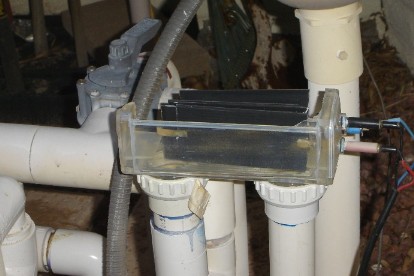
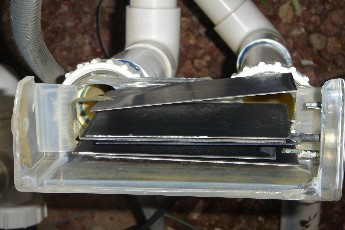
This week’s blog piece kind of writes itself. It starts with this first picture here. Nice huh? All of these pictures, by the way, are from R. Baker in Arizona. He commented here at The Pool Biz blog two weeks ago when I ran that piece, Boom Goes The Dynamite, Part Deaux.

He said: “Wow. Great information, I have a salt/chlorinator and it exploded just this past Thursday evening. This it the second time in 18 months. Of course manufacturer and pool store all act as if it can't happen and this if the first they have ever heard of it. Now I know better. Going the salt way has certainly not saved me any money of the last 5 years that I have had the system. Now going back to chlorine.”

Being the shameless opportunist that I am, I wrote and asked him for pictures, so I could share with all you lucky salt system owners what the end game can very well be for you, too. Just like it was for R. Baker.

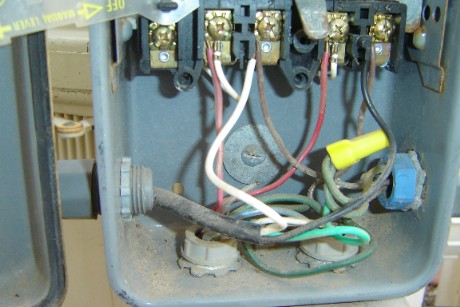
I had a million questions for him. I asked him if he could send me pictures of the exploded cell, and then if he could send me pictures of the plumbing and the electrical connections. You see, I wanted to see if it was possible that Mr. Baker had accidentally closed a valve and stopped the water from flowing through the cell, or if his system had been wired incorrectly, not on the load side of his pool pump - in other words, only getting power when the pool pump was getting power and could be sure to push water through the cell.


The picture above and this one show the exploded cell a few nights after it happened.


This picture shows the inside of his pool pump timer. Notice the black cable coming in to the box from the left and how it’s wires are connected to the second and fourth terminal lugs. That’s the Zodiac power cord and they’re properly wired so that they only get power when the pump is on to push water through the cell.


The last one shows a complete picture of the plumbing from the output of the pump to where the cell used to be - Mr. Baker had to remove the cell by the time these pictures were taken. He replumbed his system so he could get it up and running again - The cell was installed where the plumbing seems to take those crazy u-turns. It was initially plumbed higher up than that pipe behind it, as you can see by going back to look at the first picture of the exploded cell. It is also the last component in line before the pipe disappears into the ground headed back to the pool. To make sure we’re looking at this right, let’s read what the manufacturer says about where and how the cell should be installed:

“The Clearwater cell MUST be installed horizontally, with the ports down, as the last piece of pool equipment in line. (The design of the cell forms a natural gas trap. Even though the LM unit has an internal flow sensor, this installation provides a secondary safety feature to prevent gas buildup within the system.) There are no height restrictions or requirements. The cell should be installed within 6' of the power pack. Unions and adaptors are provided. Water can flow in either direction without affecting performance. 11/2" or 2" sch 40 rigid PVC is required. Any standard PVC cement may be used. Allow adequate drying time before turning on the chlorinator.”

http://www.clearwater-usa.com/pdf/LM_duo_manual_112002.pdf

I have looked and looked and looked at these pictures. And it looks like everything is installed correctly, all in accordance with the manufacturer’s directions. The cell is supposed to drain partially down when the pump is turned off, and you can see by the little rust line on the plates and clear plastic cell casing that it appears to have been doing that when the pump turned off.

The only question I had was about that big old brass gate valve between the filter output and the cell, and so I wrote Mr. Baker and asked him about that.

He responded: “That valve is left open. It circulated water to the heater. I have a small spa adjacent to the pool. It is at the same level as the pool. I never use the spa as the heater has not functioned for some time. It was not in spa mode [at the time of the explosion]. The pool timer is set to come on around 8 pm every night. There was nothing different [that] night. I opened the rear door to the house at around 9:30 or so to let my son in and I could hear that the pool didn't sound right. Upon checking it out, I found the unit had blown its top.”

So, what we have here gives every appearance of being an honest to goodness explosion of a properly installed salt system cell, an explosion so strong it blew the top of the salt cell into the neighbor’s yard. Either that, or someone snuck into Mr. Baker’s back yard and hit his salt cell with a baseball bat, twice in eighteen months.

And the resolution that Mr. Baker has received from the manufacturer?

In his own words: “This seems to be the industry’s dirty little secret and no one, manufacturer or pool store/repair guys want to talk much about it. The manufacturer sent me to an authorized (pool) repair place that in turn referred me back to the manufacturer so I am caught in a vicious circle.”

In other words, he has had no resolution. And since his system is five years old, he’s not likely to get any. The Clearwater comes with a one year full, three year pro-rated warranty on the cell that exploded.

But that’s not even what’s important. What’s important is that line in Mr. Baker’s e-mail where he said, “I opened the rear door to the house at around 9:30 or so to let my son in and I could hear that the pool didn't sound right. Upon checking it out, I found the unit had blown its top.”

How lucky that his son wasn’t playing near the pool equipment when the cell exploded.

The salt system is gone out of Mr. Baker’s back yard now. He’s had enough of exploding salt cells. And now he’s entertaining bids for repair of his Kool Deck.

Jeff Jones, the National Sales Director for Del Ozone made mention of problems with salt and Kool Deck in his e-mail two posts ago, A Long Post But Worth The Read; “In the earlier years of salt units we saw the same issues with corrosion of hand rails, diving board stands/jigs and even hard scapes like cool deck and cantilever decks.”

Coincidentally, Mr. Baker reports that the deck company “sales rep came over this morning and as soon as he looked at it [the Kool Deck] he asked if we had a salt pool. He said they see the salt damage all the time.”


And this is why I get so mad. All of us in this business who work with salt and salt systems on a day to day basis know that periodically salt cells blow up and that salt is destroying pool decks and coping and metal accessories. But most everybody pretends that it's just the most natural thing in the world and that we should all just shut up and put up with it so that the salt system manufacturers can keep selling their "equipment bundles".

When are you all simply going to say, "That is ENOUGH!" When?

Sunday, January 21, 2007

BOOM GOES THE DYNAMITE
PART DEUX


People say I’m stirring things up with talk about exploding chlorinators. They say, "Chorinators don’t explode!" They say, "Cite me one instance of an exploding chlorinator!"

Okay.

The thing that got me writing about exploding chlorinators to begin with was a conversation I was having with a prominent custom pool builder in California who had first hand experience with exploding chlorinators. We had been talking via e-mail, and I mentioned my blog. He wrote back:

"I ... found your blog and ... read four or five posts. Interesting stuff, most of which I agree with. I try to steer my clients away from salt systems for some of the reasons you've mentioned. To me it's just not worth it to make a couple of hundred bucks, but have a client referral go bad because they're not happy with their $1200 system -- a system whose reality doesn't even come close to the what the local salespeople trumpet. Hey, all my business comes from referrals, so I've got to tell them all the truth. Best policy in the long term. And I had a bad experience with the one salt system I've used this year (client insisted on having one): pool one month old, plumbed in salt system, added salt, system exploded -- literally -- two days later. Big boom: pieces of 3-in. pipe (rated at like 280 psi) shot over fifty feet away. Manufacturer had engineers, sales reps, field techs, whole works out there. Tried to replicate in lab with no success. Still don't know why it happened; just glad client not in vicinity when it happened. Needless to say, I'm a little gun-shy now."

I responded:

"...what happened to you is another stellar example of why we need to stamp out salt systems. It sounds like you had a buildup of hydrogen gas in the cell or in the plumbing. That will occur if there is power to the salt cell when there's no flow. The flow sensor is supposed to shut everything down, but if it doesn't, then that can happen. They know what caused it, but they'll never admit it. ... The way that the manufacturers and the reps keep us in the dark is by sending a bunch of people over to ‘investigate the problem’, stand around and scratch their heads for awhile, swear that it's never happened before in the entire history of their corporation, and then leave. It's an isolated incident until a guy in California (that would be you) is on the internet talking to a guy in Texas (that would be me) and that's why I love the internet. And that's why I think there's hope for our industry, now that pool guys can communicate outside the sales & marketing drenched environment of trade shows and trade organizations."

He wrote back:

"Neither the manufacturer nor supplier had ever heard anything like that happening. I believe the supplier, but the manufacturer . . . No explanation was offered, though I speculated initially about the possibility of hydrogen. You know -- anode and cathode in water, water splits into H2 and O2, the ingredients of an explosion. The engineer from the factory was, or appeared to be, baffled by the chemistry. Looking back, that seems odd, since he has a degree in mechanical engineering which would probably require at least a few chemistry classes. Anyway, they took the chlorine generator back to check it in the lab. They also tried to replicate the conditions at my client's pool, but couldn't get anything to explode."

It’s like Men In Black, where the Guv Guys come in and clean up the scene, then nonchalantly slip on their Ray Bans and then hold up the little Forget Everything Thingie, and POOF, it never happened.

I wonder how many exploding chlorinators do we not hear about because, "Gosh, this has never happened anywhere in the entire history of the free world and... Sir! Step away from the computer! Don’t Google hydrogen gas buildup and chlorine generator. Look over here. See the pretty light?"

This builder has asked me to allow him to remain anonymous for pretty much the same reason that I write this blog anonymously; we both need to keep making a living. Now, some will say that I just made all that up, because it is a textbook example of what I was talking about two posts ago. But that’s because that blog piece was written during these conversations with Prominent Custom Builder, California.

And did I nail it? When I said that the "way that the manufacturers and the reps keep us in the dark is by sending a bunch of people over to ‘investigate the problem’, stand around and scratch their heads for awhile, swear that it's never happened before in the entire history of their corporation, and then leave". Even down to the mechanical engineer acting like he’d never heard of the possibility of hydrogen gas buildup.

Because you know that if that builder had installed it wrong, those engineers and sales reps and field techs would have been the first to point out to him that it was His Fault and What Was He Thinking? and Do You Know What Could Have Happened If A Child Had Been Standing There?

You know they would have. And then they would have winked and told him, "It’s okay. We’re you’re friends. We’re going to take care of you on this one. But some day, and that day may never come, but some day I may ask you to do me a favor..."

Leave the gun. Take the cannoli.

But, like I said, if you think I made this up, then it’s no proof that salt chlorine generators blow up.

So, how about this?

http://www.chemaxx.com/hydrogen_explosion9.htm

It’s a page on the Chemical Accident Reconstruction Services, Inc. website, about a hydrogen explosion investigation. This accident happened at a water treatment plant that was using electrolysis to generate sodium hypochlorite from sodium chloride. Sound familiar? Sound like something going on completely unattended each day in your back yard? But don’t worry. I’m sure your salt system is much safer than the ones they have at an industrial water treatment facility. The investigation report clearly states that one "of the disadvantages of the electrolytic process is that hydrogen gas is also created as a byproduct", hence, in this case, an explosion.

Don’t take my word for it. Paste that link into your browser and go read it for yourself.

Still don’t believe me? Here’s a cute video of a fifteen year old kid on YouTube who does a science project where he puts two electrodes into a plastic bottle, fills it with salt water, hooks it up to a 12-volt battery and then within a few seconds after putting the power to it, lights the hydrogen gas on fire with a kitchen match. It’s actually more of an explosion, as it flairs and goes out. A little bit longer under pressure though, and it would have exploded all by itself. As you watch this video, notice how much that plastic bottle resembles your salt cell, and how much this experiment resembles the experiment you’re conducting each day with your salt system.

Please! If you don’t follow any other link off these pages, paste this one in your browser and go watch it. More than all my words, it illustrates the potential for fire and explosion that is part and parcel of working with hydrogen gas.

http://www.makezine.com/blog/archive/2006/09/electrolysis_of_water_explodin.html

This next one is from the Department of Minerals and Energy, Western Australia. It’s a summary of accident reports from 1997.

http://www.docep.wa.gov.au/ResourcesSafety/Sections/Dangerous_Goods/pdf/DG%20AccReps/DG_AccReps_1997.pdf

It says:

"The most significant incident for the year occurred at the Fremantle Leisure Centre where a hydrogen gas explosion forced the evacuation of approximately 600 people from the premises during the busy summer holiday period. The chlorination plant has been rebuilt and the design fault that caused the explosion has been corrected."

That happened on January 16th, 1997, to be exact. I found another reference to it on the web here:

http://www.doir.wa.gov.au/media_archive/16jan02.html

Notice that the name of the pdf file is also the date it was published. It was such a big deal they were still talking about it five years later on it’s anniversary date. But I guess any time you have to evacuate 600 people because of a salt chlorine generator explosion, you would talk about it for years. Here’s what they were saying in Australia, the home of salt chlorine generators, five years to the day after the explosion:

"The Department is also urging operators of swimming pools with salt-water chlorinators to ensure the hydrogen produced from their electrolysis units is safely discharged.

‘Make sure the storage treatment room is ventilated and not located near a potential ignition source, as we don’t want to see a similar incident to that which occurred at the Fremantle Leisure Centre in January 1997,’ Dr Drygala said. ‘Investigations into that incident revealed the explosion was caused by hydrogen gas igniting inside the plant room’."

There’s one more incident and I think it’s just hilarious. I mean, as hiarious as potentially life threatening explosions can be. Right now, it’s still just a story someone told me. He wasn’t there at the meeting to see it happen. I’m waiting for a couple of phone numbers so I can report it with names and dates and such like that. But in the meantime, it’s a great story, and since it may be awhile before I get back to the subject of exploding chlorinators, I might as well toss it in.

A Sales Rep was giving a product demonstration for an "in-deck" salt chlorine generator at a large pool construction company. I’ve only found one in-deck system on the internet, but until I hear from someone who was there when it happened, I’m not going to name names, just in case there’s two in-deck systems that can blow up. Now, this pool construction company's plaster consultant had told them that they ought not to buy the in-deck system because the system operated even when the pump was turned off, which meant no water flow through the unit, and therefore, there was a potential of the hydrogen vent being blocked by something as simple as a pool toy - gosh, I never see those in a pool. Do you? - and someone with a cigarette or a flame source causing a fire or explosion if the lid were to be opened for service or checkout. So, the President of this pool company asked the salt system Sales Rep if it was possible for it to happen. Of course, the Sales Rep started right in ripping into the consultant’s credibility, telling everyone there, "Aw, the guy’s a crackpot. He just hates salt. Who you gonna believe, a guy with a tech library bigger than my house? Or me, a recent graduate of the LaSalles Institute’s School of Business and Locksmithing?"

It is ever thus when you’re talking to Sales Reps. You’re either afflicted with an afternoon of tear stained pleas of, "Oh, God! Please buy my product!", or they go right for the jugular, disparaging anybody with an opposing point of view, especially if that opposing point of view is based on something as trite and meaningless as "facts" or "independent research" or "government initiated accident reports".

Anyway, the bottom line is the Rep said, "No way can this thing explode", turned on his demo unit - which must have consisted of the unit set up in a tank of water- and lit a match to prove how wrong the consultant was. There was a blinding flash as all the accumulated hydrogen gas went up in a big POOF. No one was hurt, but needless to say, the pool company didn't buy the in-deck system.

Now, I have tremendous professional respect for the person who told me that story. And I was introduced to that person by someone who I have even more respect for. I believe it happened just like that.

Of course, at this point, the folks on the Dark Side will say that, gosh, there’s plenty of other stuff that can blow up out there on your pool equipment pad. Well, that’s great logic. Let’s add one more. But to be fair, let’s look at the competition for Most Explosive Device In Your Back Yard.

Like your pool filter. It operates under pressure. Make a mistake while you’re working on it and the top could come flying off and rip off your face, at the very least, and kill you at worst. And in the past, that’s happened more often than I like to think about. When I first started in this business, back yards were full of aging stainless steel filter tanks with these minuscule little lips on the tank halves that these skinny tank bands held together with a little old 1/4" nut and bolt.

But these days, it’s a different story. Those tank halves have big old seating surfaces, and the tank bands are thick and heavy gauge, with big old bolts with tons of threads on long fasteners to make sure that a thread failure is a literal impossibility. They even have springs to show you how tight to tighten the tank band clamp so it’s not too tight, not too loose. And on the off chance that you’re from Mars and didn’t realize that you ought to turn off your pump before you start to take your filter apart, there are huge warning labels that explain in big bold letters how dangerous that filter tank can be if improperly serviced. They even have cartoon pictures of cartoon people getting hit in the head with cartoon tank lids just in case the person trying to take it apart can’t read.

You know, people had to die to get those improvements in filter tanks and to get those big old warning labels. When it became cheaper to build a better and safer filter than it did to keep paying off on all those wrongful death suits, they started building better filter tanks.

So, where’s all the warning labels on the salt systems? We already know they can blow up. How come these guys don’t have to put any labels on them? I mean, we know now that electrolysis is a dangerous process. So what’s up?

I guess the cost isn’t high enough yet.

Then, too, you have a heater out there, and it doesn’t have near as many warning labels on it as your filter does. And it’s got a gas line going into it. Gas is flammable AND explosive. But then, is there anybody left on planet earth who doesn’t know that gas is explosive? I bet not.

On the other hand, did anyone along the way, in the process of your salt system going from an idea in your head to an appliance in your back yard point out to you that there was an explosion risk with your salt chlorine generator? I bet not.
The other day I was talking to a pool guy who works for a service and repair company that fills in the slack times by signing up to do warranty work for as many of the equipment manufacturers as they can. In our conversation we got around to talking about salt.

He said, "When I was in the Navy, I used to ride submarines, and we used to practice responding to different disasters. Like a fire, or flooding, stuff like that. And one of the most common drills we used to run was fire in the Machinery space and it was always the O2 generator that they were pretending was on fire. And if we didn’t pretend to get the fire under control fast enough, then we’d pretend it exploded, and then we all pretended we died."

Submarine O2 generators make oxygen out of seawater through the process of electrolysis.

But I’m sure the United States Navy Nuclear Submarine Force is exaggerating the potential risk. I’m sure your salt system is 100% safe and can never explode. I’m sure it’s built to the same exacting specifications as those SUBSAFE Oxygen Generators.

http://en.wikipedia.org/wiki/SUBSAFE

And if you have any doubts about that, just ask your Salt Sales Rep. He wouldn’t lie to you. He’s your friend.

One last thing to contemplate. All the references I've cited are either conversations I've had with people it happened to or heard of it happening, and the rest are from government reports or stories about government agencies where these kinds of things are routinely reported and publicized. Ask yourself this; If a chlorine generator blew up two streets over from your house, what mechanism is there for it to be reported?

The only one I can think of would be the manufacturer's internal reporting. Follow me here. Your chlorinator blows up. You call your pool guy who sold it to you. He calls the manufacturer. The manufacturer comes out with a bunch of people to "investigate the problem". They stand around and scratch their heads for awhile, swear that it's never happened before in the entire history of their corporation, clean up the mess, give you a brand new chlorine generator and then leave.

That's it. And based on that kind of incident reporting, I'd have to agree that chlorine generators never blow up. Wouldn't you?

Tuesday, January 09, 2007

BOOM GOES THE DYNAMITE

I was wrong about something last week. I said that in Australia, salt systems weren’t allowed on commercial pools. Period. I had that information from the fellow at poolindustrysecrets.com, and being as how he’s from Australia, I took it for Gospel.

Then I found this in the Department of Health and Community Services Draft Public Health Guidelines for Aquatic Facilities, Norther Territory, Australia:

"4.5 Special Requirements for Electrolytic Salt Chlorinators

As a byproduct of this process is the production of hydrogen gas (which could accumulate in a pressure filter) Electrolytic Salt Chlorinators shall only be installed downstream of pressure filters. Electrolytic Salt Chlorinators shall be electrically linked to the main circulating pump to prevent the chlorinator operating when the main circulating pump is switched off. Where the electrolytic salt cells are not designed to be located above the filter vessel gas detectors shall be fitted that will terminate the operation of the chlorinator in the event of hydrogen gas build up.

As an Electrolytic Salt Chlorinator cannot respond to instantaneous chlorine demand a backup chlorine system shall be installed, using gas, liquid or granular chlorine."

http://www.nt.gov.au/health/docs/cdc_envhealth_AFG%20Draft%20final.pdf

Perhaps David was just talking about his territory when he said that salt systems weren’t authorized on commercial pools. Or perhaps he’s right. This is a Draft plan, so maybe they’re not yet authorized in the Northern Territory. But they must be at least planning to approve them. Otherwise they wouldn’t be going to all the trouble of spelling out how to properly install those salt systems and about using back up gas detectors so they won’t blow up.

You knew that they could blow up, right? I mean, I’m sure your Sales Rep told you that if your salt cell wasn’t properly installed, or if your flow sensor failed to operate correctly and your pump motor went out, or you closed the wrong valve, or your system lost prime, that the cell could keep generating chlorine without water flow, and that after a little while, one of the byproducts of the process, hydrogen gas, could build up in the cell and in the plumbing and reach an explosive level and, well... explode. You know, like BOOM and flying shards of PVC and plastic shrapnel kind of explode. Oh, yeah, and flying titanium plates, too. I forgot about those.

I know. I know. I’m being terribly alarmist. Or am I?

Here’s an inventor named Ben Bremauer who has applied for a patent for his version of a chlorine generator - he calls it an electrolytic sanitiser generator. Ben talks about the shortcomings of the safety devices currently in use to avoid hydrogen gas build up.

Ben says:

"Although an adverse byproduct of this process is the production of hydrogen gas H.sub.2(g), under normal operating conditions the H.sub.2(g) flows with the feed water into the body of water and escapes safely into the atmosphere. However, in some circumstances the water flow conditions may not be normal and it is at these times that safety issues arise with respect to H.sub.2(g) containment. For example, a blocked suction line, closed valve(s), incorrect installation or a seized pump can effect a loss of water flow. It may also cause present safety devices to become ineffective, inoperable and/or redundant. In such circumstances, the cell may continue to produce H.sub.2(g) such that the volume of H.sub.2(g) contained in the system may reach dangerously explosive levels. The H.sub.2(g) may continue to be produced and fill not only the cell chamber but all the filtration system plumbing and receptacles. A large H.sub.2(g) reservoir may result leading to a potentially explosive situation.

[0005] Electrolytic cells have been disclosed in which the electrodes are positioned in between inlet and discharge ports of the cell with no provision to trap and contain hydrogen gas in the event of a water flow stoppage. These cells are plumbed horizontally or vertically and may use flow switches plumbed in series with the cell to detect a water flow fault condition. In such an arrangement, the flow switch may be designed to suspend power to the cell to minimise the potential a H.sub.2(g) build up.

[0006] The use of a flow switch may be considered a good primary safeguard against a loss of water flow. However, the use of a flow switch alone as a single safe guard against hydrogen gas build up has been found, in the inventor's experience, to be insufficient. A flow switch is a mechanical device and therefore has a potential for failure. In the event of a water flow stoppage, a flow switch failure could cause a massive hydrogen gas volume to accumulate in the plumbing and filtration equipment and therefore become hazardous. To the inventor's knowledge and belief, this one safety device, which the inventor believes should only be used as a primary measure, is the only safety feature relied upon by electrolytic chlorinators currently on the market." (Emphasis mine)

http://www.freshpatents.com/Electrolytic-sanitiser-generator-dt20061109ptan20060249400.php

Now, full disclosure here requires me to tell you that installation guidelines for salt systems has the installer using the load side of your filter pump timer, so that when power to your pump is interrupted, power to your salt system is interrupted as well. But it doesn’t take into account, nor can it, the failure of your salt system’s only safety feature, the flow switch, and then a misalignment of your valves (Gee, no one ever does that!), or a failure of your filter pump motor, or a blockage of your system that causes it to lose prime (like a low water level at your skimmer). Any of these things combined with a faulty flow switch could allow your salt cell to keep running and through the process of electrolysis, continue to produce chlorine and all of it’s byproducts, one of which is highly explosive hydrogen gas.

You know. Hydrogen gas. Of Hindenberg fame? "Oh, the humanity!" You remember, right?

Ben goes on to point out the two types of flow switches that are currently in use:

"[0007] Cells have been disclosed having separate flow switches or integral flow switches which operate at 90 degrees to the direction of flow. A cell may be installed without plumbing the cell in a gas loop and where the cell is at the uppermost portion of the loop. In such an installation, an integral flow switch or a separate flow switch may be installed but a failure of the flow switch to detect a water flow failure could lead to a hydrogen gas build up.

[0008] Other manufacturers have used a non mechanical conductive electrode arrangement positioned at the top of a horizontal cell chamber. However, such methods detect only the presence of water and not the flow of water. It may therefore fail to detect a lack of flow of water if the cell is not installed in the horizontal position as generally specified in installation instructions. Moreover, incorrect installation may find the sensor positioned at the lower portion of the cell rendering it effectively redundant. Incorrect orientation of the cell chamber may cause the inherent physical gas loop to no longer contain hydrogen gas in the event of a flow fault. If both return and suction line valves are closed, the chlorinator cell will continue to operate. The inability of the hydrogen gas to displace the water in the cell may lead to a pressure increase in the plumbing system and eventually damage the plumbing and potentially cause injury."

Now, I’ve had experience with that second type of flow switch. A couple of years ago, I took over a pool and found a salt system installed funny. So, I called the 1-800 tech and ran the installation past him. It was plumbed with the cell on the pool return and wired to go on and off with the main pump. But it was a pool/spa combo, so when you put the valves in the spa mode, you still had power to the salt cell, even though there was no water flowing down the pool return. The 1-800 guy said, "no problem, when you don't have pressure on the pool side, the cell will drain down and sense the loss of water and shut off. That's our way of sensing flow." I told him that when I rotated the valves, that for whatever reason the cell didn't drain down, and he said, "Ooh, that's not good. The thing could build up hydrogen gas and blow up if they run it long enough like that", which I thought was good to know. He recommended that I replumb the system so that the cell was in the common line for both the pool and the spa. But when I told the folks who owned the pool why I wanted to replumb it, that if I didn’t, it might explode, they looked at each other, frowned and then told me to "take the damn thing off" their pool.

This isn’t the first time around for exploding chlorine generators, either. There’s an old system out there, maybe still being used in a few back yards, that uses a brine tank and two chambers to create chorine gas out of salt. In the old systems, when they didn’t get proper attention, sometimes the hydrogen gas vent in the cathode chamber would get clogged. Then, the hydrogen gas would build up and eventually go BOOM. The extra down side of that type system was that it collected the caustic sodium hydroxide in the cathode chamber, as well. So, if it blew up, it spewed caustic liquid all over the place in addition to blowing plastic shrapnel all over everywhere.

But like I said, I’m sure I’m being an alarmist. If there was any real risk that your salt system might blow up, I’m sure there would be huge caution labels all over the unit and in the owner’s manual.

And there are quite a few in the Owner’s Manual, under Installation Instructions. Well, sort of. Some of the manufacturers are better at owning up to it than others. Like Jandy and Pentair do a pretty god job, with big bold Warnings in the Warnings section and throughout the manual’s installation instructions. The next closest is Zodiac, who talks briefly about the possibility of "having a gas build up" and about "possible cell damage". They never use the term flammable gas. Not even once. Which is odd, because they now own Jandy. Makes you wonder, with this new marriage of companies, will Jandy’s tech department rub off on Zodiac and get them to address the issue more forthrightly? Or will Zodiac’s marketing team get Jandy to throttle back on those sales-killing terms like WARNING and FLAMMABLE GAS.

Goldline is the least specific in their installation instructions. The closest they get is:

"Wire the Aqua Rite to the LOAD SIDE of the filter pump timer. It is very important that the Aqua Rite is powered only when the pump is running."

I searched their document for hydrogen, gas, buildup (which returned an excerpt about calcium buildup), and flammable. They’re not there. Look for yourself:

http://www.goldlinecontrols.com/Support/manuals/092009i.pdf

Now, ask yourself this; how many pool owners read the Installation Instructions? If that’s the only place it’s talked about, then it’s not talked about enough. Well, until now, that is.

There are some other references you may want to look at to assure yourself that I’m not just making this issue up. Here are some links to some salt industry pages, geared more for the tech geeks, that talk about the possibility and likelihood of hydrogen gas buildup in salt systems:

http://www.watermaid.co.za/howitworks.htm Read the power supply description.

http://www.salchlor.com/process/process_04.htm This one gives the ratios at which hydrogen gas is safe, flammable, or explosive.

I already know that some sharp Sales Rep out there is preparing his comeback for you on the off chance that you’ve read this and you pose the question "what about the hydrogen gas?". He’ll most likely explain that, hey it’s no different than the people you hear about who mix Cal Hypo with Tri Chlor tabs and get an explosion.

And while that’s true, the difference is, with the Cal Hypo and Tri Chlor, you have to be stupid enough to stand there and mix them and watch them begin to bubble and stick around to see what happens next. With hydrogen gas buildup in a salt system, all you have to do is own a salt system and be the unlucky one that it happens to.